Customer experiences and articles

Increase milk's selenium levels with Milka Vitamin E Concentrate+Se powder

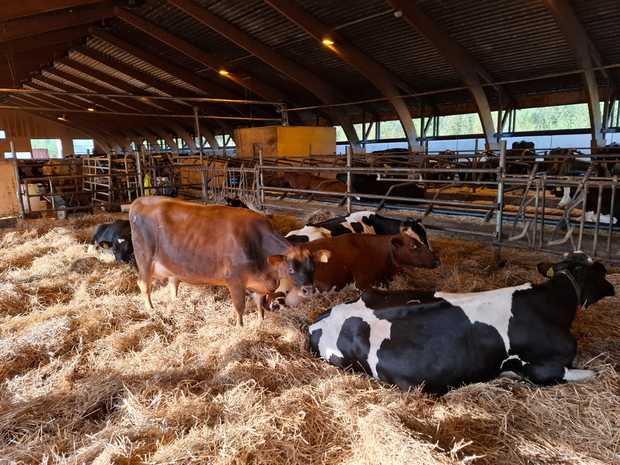
Hämeenlaakso dairy farm is located in Joutsa, Central Finland. The farm is run by Jani Rantanen and Riitta Tarhonen. The farm was founded in the 1950s, and we are the third generation. As its name suggests, the farm has dairy cattle. Two robots milk in the barn built in 2010. The replacement animals are also raised themselves. Calves under one year old are raised in an old dairy barn, heifers in an free range unheated barn. The main breed of cattle is Holstein. Grass, barley, wheat and peas are grown in the fields. Maize has also been experimented with.
The dairy cows live in a barn. They are free to set their own rhythm for eating, drinking, milking and resting. The animals calve in a spacious, permanent bedding based calving pen. The farm's children walk the small calves outside with halters and play with them. This makes the animals easy to handle.
The basis of the feeding is high-quality silage. The cows have free access to a feed that contains, in addition to silage, a barley-wheat mixture, rapeseed, minerals and vitamins. The robots deliver a barley-pea-rapeseed mixture and Biofarm's Milka EnergyExtra. EnergyExtra has been really tasty and popular among the cows. It has also worked well even in cold weather when dispensed by a robot.

Milka Vitamin E concentrate + Se product has also been used. Initially, the selenium level of the cattle dropped to too low levels. The amount of Vitamin E concentrate + Se product used is really small, only 30g/animal. That is, about 3kg of it was put into a 6500 kg load of feed. In less than three months, the selenium level of the tank milk had risen by over 20 units. That means the product is really effective and mixes well with the feed.
The farm also sells agricultural machinery, under the name of JR Maatilakone Oy. We import, among other things, slurry injector, feed cutters, feed wagons, seed drills for small seeds, cattle brushes and hoof care stands. In addition, the farm does small-scale machinery contracting.

Text and photo: Riitta Tarhonen


Customer experience with Green Leaf Foliar Fertilizers from Hyppönen Farm

In Isossakyrö, the Hyppönen farm produces piglets and fattening pigs, as well as crops. The farm uses foliar fertilizers manufactured by Biofarm, and we heard from the farm owner, Antti Hyppönen, about user experiences with the products. Thanks to Antti for the comments and pictures!
"I have been using GreenLeaf Hiven EDTA strong foliar fertilizer and manganese chelate for a few years. I use fertilizers for all types of grain.
It is easy to use. Viljahiven EDTA strong and manganese chelate mix well in tank mixes and are pleasant to use because they have excellent flowability.
I use the products mostly in connection with weed spraying in tank mixes. I have also used them at a later treatment time if the grain needs it.
I have done a few test plots in terms of the product's functionality and I have noticed that the 0 squares were already visibly weaker. The final result was obtained with a leaf green meter and other nutrient studies.
Summers have become challenging and weather conditions are variable. Supplemental nutrition provides good trace elements for grain use in the early growing season and promotes good, healthy growth. Additional manganese is useful in a later stage if its levels are insufficient for the plant. That is why I have started using supplements for cereals. I can recommend these substances if the supplemental nutrients are right. Good mixability in tank mixtures is the biggest plus of the substances.”

Text and photo: Antti Hyppönen, Isokyrö


Dairy production with passion and professionalism in Montola

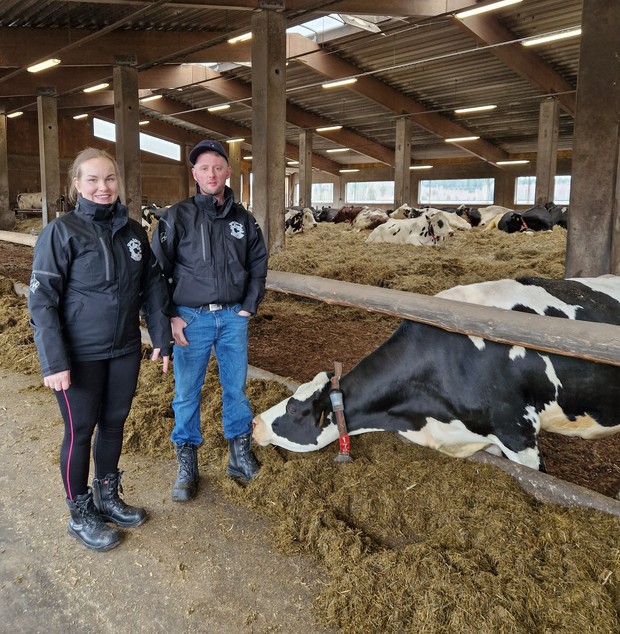
Aatu and Titta Liukkala's dairy farm is located in the beautiful rolling field landscape of Lammi, Montola village, Hämeenlinna. The farm has been developed with professionalism and with animal welfare and conditions as close to nature as possible in mind. Titta is particularly well-versed in animal behavior, and this is evident in the behavior of the animals in the barn. The atmosphere is peaceful and respectful between humans and animals. Cows are allowed to roam freely to eat, drink, be milked, and lie down. When animals learn from the calf that they do not need to be afraid of handling situations and that human actions are predictable, working with them is safer and easier for humans, Titta says.


The barn differs from a traditional barn in that the cows do not have sleeping cubicles. In the middle of the barn is a spacious, well-drained, soft sleeping area where the cows can lie down and get enough sleep. There is plenty of space on the feeding table, feed is easily accessible to the cow, and there are no structures that interfere with eating. The aisles are clean and grippy under the hooves, so it is easy for the cows to walk to where they want and to dodge a friend without slipping if necessary. The barn has fresh air and natural light enters the barn through the large windows in the walls and through the ridge skylight.


Titta and Aatu are enthusiastic and growth-minded food producers and believe that the dairy cow is the true queen of the circular economy in food production. The farm has been developed a lot during Titta and Aatu's entrepreneurship. The latest big changes on the farm have been the transition from organic to conventional production a year ago and the switch from station milking to milking robots in November 2023. The farm's entrepreneurial couple has faith in domestic agriculture and food production, but Titta cites the unpredictability of agricultural policy as a negative thing, which creates uncertainty.
There are currently about 100 cows in milking. The average daily milk yield of the herd from the robots on the day of the interview was 40 kg, and several cows are now producing 60–70 kg of daily milk after calving. After some initial difficulties, the cows have started to move around independently with the robot, which is reflected in the number of milkings, passes and kilos of milk. The most enthusiastic cow has up to forty passes per day and produces 70 kg of milk per day. “Cows do have the potential to milk, as long as the conditions do not limit them. When the cow receives enough suitable feed, milking is pleasant for her and her physical and psychological conditions are in order, it is reflected in the output,” Titta sums up.

The basis of feeding is high-quality silage. The percentage of concentrated feed is tried to be kept reasonable. The cows receive compound feed freely and complete feed from the milking robots, as well as an energy solution, Biofarm's Milka EnergyExtra. The first 60 days after calving, 5 dl and 3 dl until day 100. After that, if necessary, for individual cows. Titta praises that EnergyExtra tastes good to the cows and works well when dispensed by a robot. Even though the cows have high yields, they get enough energy from the feed. This is supported by the observations made during the veterinary examination: 15 early season cows were checked by the veterinarian on the farm and all of the examined ones had started their heat cycles really well and showed no signs of energy deficiency.

You can learn more about the operations of the Liukkala farm at: https://www.maitoamontolasta.fi/

Text and photos: Marjo Korpikoski, Biofarm Oy


Prevention, monitoring and planning are important factors at the Nihtilä farm

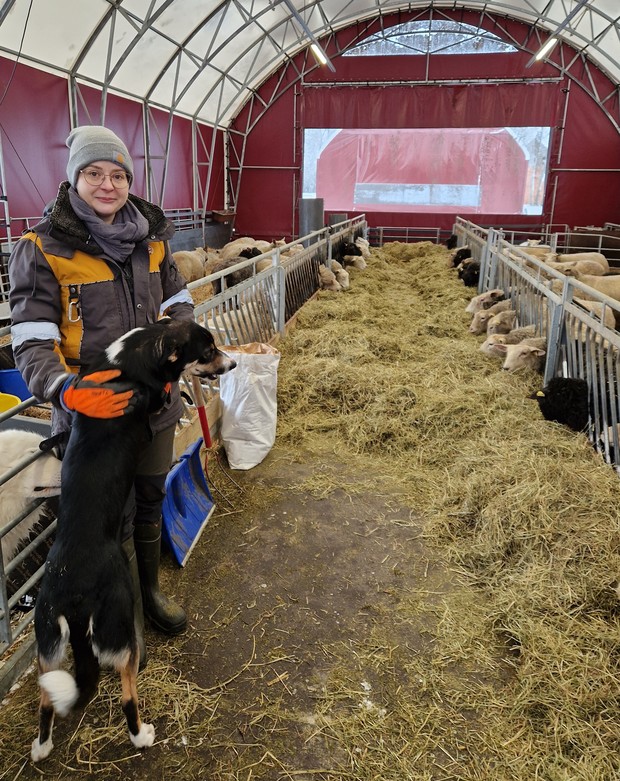
The Nihtilä farm in Kärkölä is engaged in crop cultivation, forestry and meat lamb farming. Malting barley, bread wheat, peas, rapeseed and fodder grasses are grown in the fields. In addition, the farm has protection zones, nature management grasslands, a commercial forest and a voluntarily protected forest area. The farm has been in the Nihtilä family since 1885. The current entrepreneur, Nina Nihtilä, has been an entrepreneur on the farm since 2021. Nina works alone on the farm and her retired father acts as a substitute in field and machine work. In addition to the sheep, Nina has four cheerful and active Border Collie shepherd dogs and a flock guard dog that keeps extra guests at bay.

When it comes to field cultivation, Nina collaborates with her cousin and uncle's farm companies so that they share machinery and dryers. This enables the use of modern and efficient machinery, which would not be economically feasible for an individual entrepreneur. The arrangement also brings flexibility to field work, as they replace each other during busy periods, so that it does not matter whose fields they are in, as long as the machinery is moving and the work is progressing. Sowing and threshing are done together, and each person does the surface fertilization and plant protection measures themselves. The field work on the feed side, with the exception of sowing and fertilization, is done by contractors from Kärkölä.

In addition to farm work, Nina works as a veterinarian and is studying. She works as a substitute for an inspection veterinarian at Vainio Teurastamo and provides health care for Lammasmaailma Oy and a small-scale sheep practice under her own business name. At the beginning of the year, Nina started as a doctoral researcher at the University of Helsinki in the Food Chain and Health Doctoral Programme in sheep research.

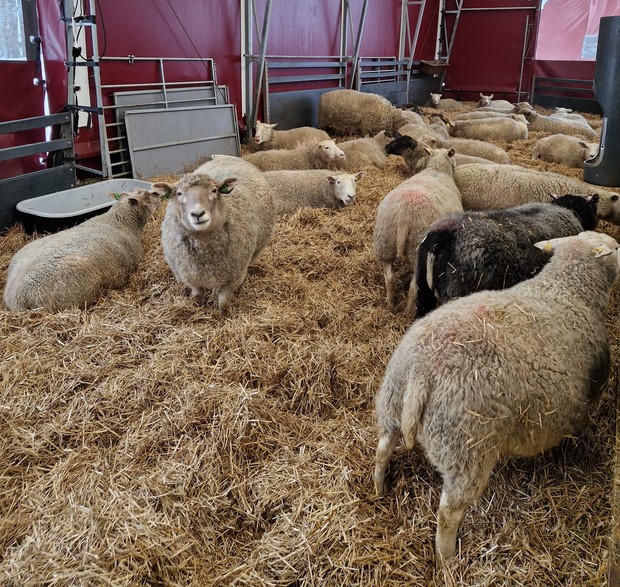
Nina's sheep spend the winter in a cold pen. The number of ewes has fluctuated between 60 and 110 over the past couple of years. The goal would be to have 80 ewes for breeding next autumn and to maintain that number for the time being. There would be enough pasture land for a larger number, but due to the difficult political and economic situation in agriculture, investing in a pasture does not make sense at the moment. There would be enthusiasm and expertise for developing and growing the farm. High prices for production inputs and difficult weather conditions make grain farming unprofitable in some years, so difficult times lie ahead. Grasslands generally grow well, even if the weather conditions are more challenging. However, the number of sheep cannot be increased now, so the area of grassland cannot be increased indefinitely.

Good quality roughage as the basis of sheep feeding

Nina says that her sheep's diet is very roughage-based, and good quality roughage is the basis of their feeding. Adult animals are fed only with high-quality pre-dried silage or hay. Based on feed analyses, feeding is supplemented as needed. Grass fodder is harvested in time and the goal is to get three harvests from the grass during the summer. During the indoor feeding season, lambs are given free access to concentrated feed from the lamb bar, which consists of barley and peas from their own farm and oats from a neighboring farm. Only salt, vitamins and minerals are purchased as commercial feed products. Feeding plans are made annually based on feed analyses. All roughage batches are analyzed. Analyses are carried out on her own and purchased grain, and Nina chooses domestic, cost-effective and well-absorbed products from purchased feed.

There is some variation in purchased feed annually, depending on the supplemental needs of her own feed. Nina considers it important that mineral feeds are rich in organic selenium. During the grazing season, ewes and breeding rams graze on natural grasslands and buffer zones. The ewes' colostrum is measured for Brix and Nina freezes high-quality colostrum to be used for lambs that do not receive colostrum from their mothers or that have a low Brix value in their colostrum. Nina also has Biofarm's Novilam drinkable feed in reserve, in case additional milk is needed for some lambs. When lambs are weaned, their dry matter intake must be sufficient. The lambs are moved to pasture after they are weaned and they are finished with block grazing on clover-rich forage grasses without concentrated feed. Pasture rotation has been carefully considered, and the lambs do not return to a pasture they have grazed on all summer.

Products from Biofarm in use

Nina says that she has been a satisfied user of Biofarm products since 2013. As a veterinarian and dog owner, she has become familiar with prescription products and over-the-counter products for pets. For lambs, especially feed products. Nina says that it is almost easier to specify what she has not used, because most of the products are familiar and have been found to work for both herself and her patients. Particular favorites are Milka vitamin E concentrate + selenium for sheep, AIKA series Kaopekt Forte for dogs, as well as the oral hygiene products Hexarinse and Virbac VOHC products for dogs, and Biobzz cream containing beeswax for herself and her animals. These are always on the shelf.

Nina's tips for raising sheep

  • A scale is an absolutely essential tool for a lamb farmer and weighing is an important procedure. Lambs are weighed regularly to ensure that they are growing. If they are not weighed, it is also not possible to intervene in abnormal growth as effectively.
  • Good maternal qualities are important for a ewe. These include smooth lambing, the ewe producing sufficient and good-quality milk, and the ewe must take care of her lambs independently.
  • Taking Pap smears and preventive parasite control! Fecal samples are taken from ewes in the spring and from old and abnormal individuals. Parasite control is only carried out on individuals as needed to avoid resistance. Effective block feeding in grazing is important to avoid parasite problems.
  • Good feed, preventive health care and good animal material. Good care, planning and foresight can influence costs, as it is significantly more expensive to treat a problem that has already arisen than to prevent it. Daily observation of animals is important, as deviations should be reacted to immediately.
  • Analysis of feeds and feeding plans based on them. It is important to analyze and measure and utilize the data obtained.

Text and photos: Marjo Korpikoski